
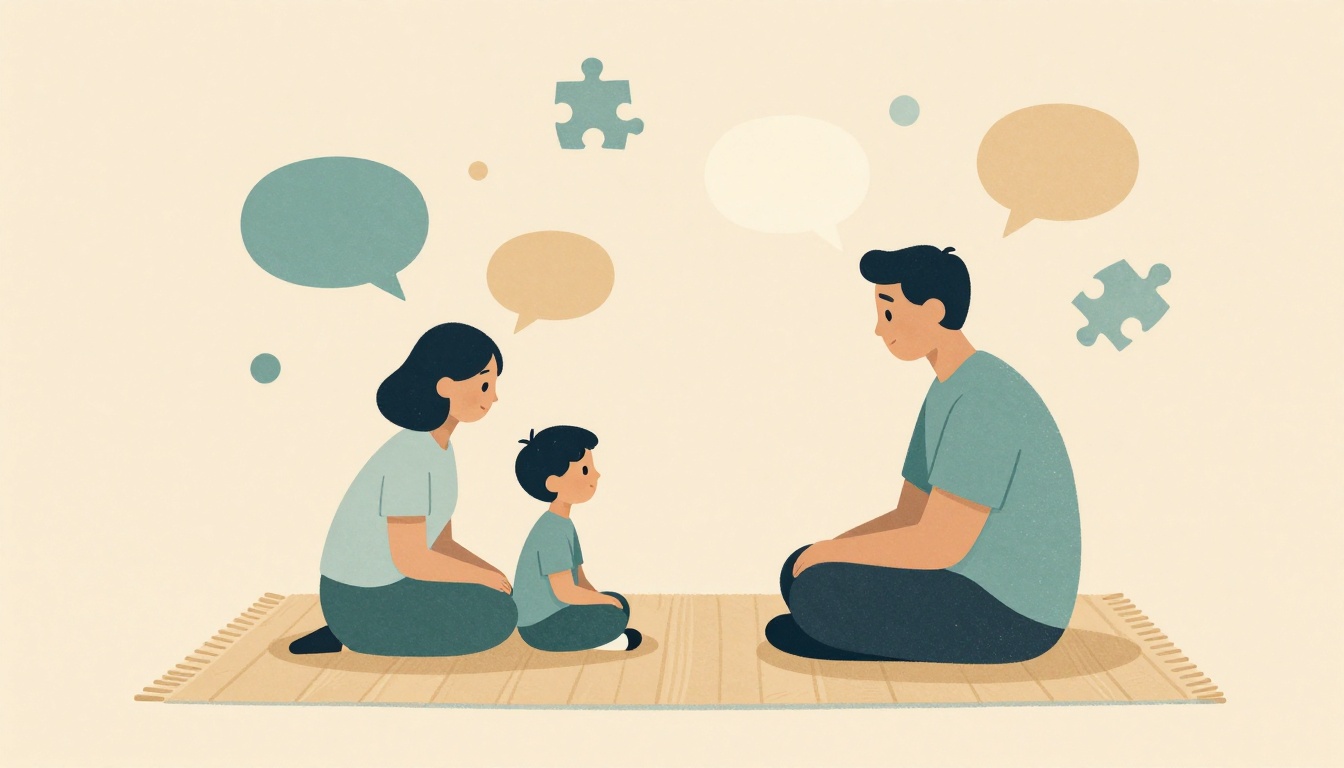
If you're wondering whether your child's communication skills are on track, you're not alone. Many parents notice that their toddler isn't saying as many words as a peer, or that their preschooler is hard to understand. The question is: when should you seek a professional speech evaluation? Acting early matters—research shows that untreated language delays can lead to long-term academic and social difficulties, while early intervention significantly improves outcomes. This guide walks you through the signs, the evaluation process, and how to get help in Philadelphia.
At what age should a child typically be able to combine two words into a phrase like 'more milk'?
Select one answer.
What counts as a speech delay?
Speech and language delays are different, though they often overlap. A speech delay refers to difficulty forming sounds, words, or clear speech—for example, a child who struggles to pronounce certain sounds. A language delay involves challenges with understanding or using words and sentences, like trouble following directions or combining words. Knowing the difference helps you describe your concerns accurately to a professional.
Age-by-age signs to watch for
Developmental milestones give a useful baseline. According to Nemours KidsHealth, by 12 months a child should be using gestures like pointing or waving. If your child isn't babbling by 12 months, that's a red flag. By 16 months, most children have a few words like "mama" or "dada"; no single words by that age warrants attention. By 24 months, toddlers typically combine two words ("more milk"), and by age 4, a child should be understood by strangers at least half the time. Persistent stuttering, a very small vocabulary compared to peers, or avoiding social interaction due to communication challenges are also warning signs, notes Pediatric Communication Solutions.
When to seek an evaluation
You don't need to wait for a "perfect" set of symptoms. Consider an evaluation if:
- Your child has lost previously acquired words or skills.
- Your child is not meeting the milestones above.
- Your child shows extreme frustration when trying to communicate.
- Speech is not understood by familiar adults after age 3.
- Teachers or caregivers express concern.
- Progress has stalled for 3–6 months.
As Twinkle Healthcare advises, waiting may seem reasonable, but early intervention yields better outcomes. A speech evaluation is proactive, not reactive.
What happens during a speech evaluation?
A speech-language pathologist (SLP) conducts the evaluation, often in a play-based setting. The process typically includes:
- Caregiver interview: You'll discuss your child's developmental history, medical background, and your specific concerns.
- Play-based observation: The SLP watches how your child communicates during natural play, assessing spontaneous language and social skills.
- Standardized testing: Formal tests compare your child's skills to age norms.
- Oral motor assessment: The SLP checks the physical structures used for speech.
- Hearing screening: Since hearing issues can mimic speech delays, a hearing check is often recommended first.
For children under 3, you can contact your state's early intervention program. Every U.S. state offers these services, and eligibility is based on an evaluation of your child's skills, as explained by USA.gov. For children 3 and older, you can request an evaluation through your local school district—even if your child doesn't attend public school.
How to get an evaluation in Philadelphia
Philadelphia offers a range of options, from large hospital systems to private practices. You can start by talking to your pediatrician, who can refer you to an SLP. Or you can contact a private practice directly—many offer in-home or virtual evaluations, which can be more convenient for busy families. Some practices, like Domino Therapy, provide both in-person and virtual speech therapy services, making it easier to fit an evaluation into your schedule.
Take the next step
If you're seeing any of the signs above, don't wait. A speech evaluation can give you clarity and, if needed, a roadmap for support. Early help can make a significant difference in your child's communication and confidence.
How the Featured Expert Can Help
Domino Therapy offers speech therapy services for families, schools, and therapists, with both in-person and virtual support based in Philadelphia, PA. Their focus is on enhancing communication skills and professional growth, making them a versatile partner for parents and educators. To learn more or schedule an evaluation, visit Domino Therapy.